
The fashion industry is standing on the brink of its biggest regulatory shift in a generation. Across the world, governments are moving past voluntary sustainability pledges and enacting hard laws. At the center of this legislative wave is the Digital Product Passport (DPP).
By requiring brands to provide a transparent, scannable record of a garment’s entire lifecycle (from raw material sourcing to end-of-life recycling), the DPP will fundamentally change how clothes are bought, sold, and manufactured.
For many brands, compliance feels like a massive logistical headache managed by supply chain teams and lawyers. But the secret to seamless traceability isn’t found in a spreadsheet or a legal brief. It starts at the very beginning of the product lifecycle: at the 3D pattern level.
So what is a Digital Product Passport (DPP)?
In short, a Digital Product Passport is a digital twin of a physical product, accessed via a QR code, NFC chip, or RFID tag embedded in the garment. When a consumer, auditor, or recycler scans the tag, they get instant access to verified data regarding:
- Material Composition: Exactly what percentages of fibers were used (and their origins).
- Supply Chain Traceability: Which factories spun the yarn, wove the textile, and sewed the seams.
- Environmental Footprint: The carbon and water footprint associated with making that specific item.
- Circular Economy Instructions: How to repair, resell, or properly recycle the garment when it is worn out.
For brands operating globally, this is no longer optional. Compliance deadlines are approaching, and failing to provide this data will soon mean being locked out of major retail markets.
Retrofitting Data is a Nightmare
The mistake most brands make is trying to compile DPP data after the garment has already been designed, sampled, and sent to production. Tracking down material certifications, measuring exact fabric consumption, and calculating material waste at the factory level after the fact is inefficient. It leads to delayed product launches and vulnerable data gaps.
To build a flawless product passport, the digital identity of the garment needs to be born at the exact same moment the design is conceived.
Why Traceability Starts at the 3D Pattern Level
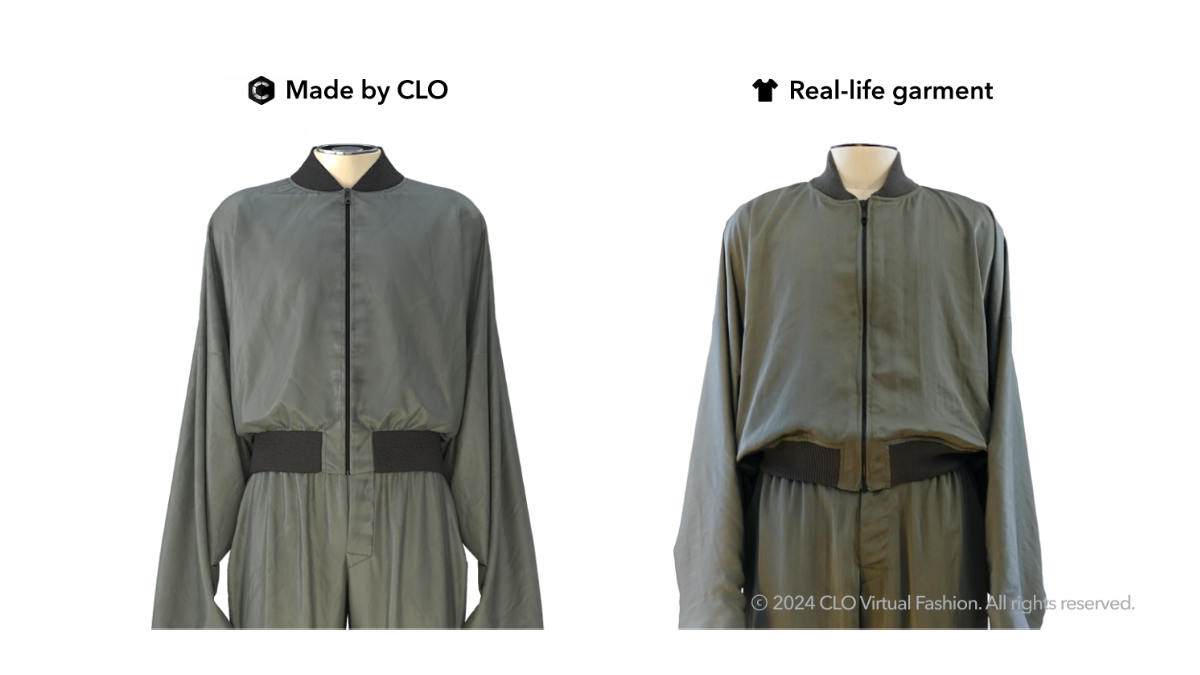
When you design a garment using CLO, you aren’t just creating a visual image, but building a data-rich, mathematically accurate digital twin. Here is why that 3D file is the ultimate foundation for your DPP strategy:
Embedded Material DNA from Day One
In a 3D workflow, you don’t just assign color and print to pattern pieces, but entire physical fabric properties. Such a digital fabric profile holds metadata. From the moment you drape a virtual textile, you can link it directly to its physical counterpart’s certifications (like GOTS or GRS certificates). The digital asset tracks the material data before a single physical thread is ever cut.
Precise Material Consumption and Efficiency Metrics
One of the hardest metrics to track for a DPP is the exact environmental footprint of manufacturing waste. Because CLO allows you to run automatic nesting and markers (arranging pattern pieces on a digital roll of fabric), you know your exact material efficiency down to the millimeter before sending files to the factory. You can instantly calculate fabric yield and waste percentages, feeding clean, uncorrupted data straight into your sustainability reporting.
A Permanent “Instruction Manual” for Recyclers
When a garment eventually reaches a textile recycling facility a decade from now, the workers (or automated sorting machines) need to know how to disassemble it. Is the zipper metal or nylon? Is the stitching thread polyester or cotton? By archiving the original 3D project file, you preserve a permanent blueprint of the garment’s construction. This file maps every seam, trim, lining, and hardware component, providing an automated “disassembly manual” that can be linked straight to the DPP code.
Eliminating the Carbon Footprint of the Design Phase
A massive chunk of a garment’s carbon footprint happens before production even begins, driven by the shipping of physical fit samples back and forth across oceans. By using 3D to approve fit, style, and colorways virtually, you already drastically lower the pre-production carbon footprint.
Shift Your Compliance Left
In software development, there is a concept called “shifting left”: moving testing, security, and compliance to the earliest possible stage of the timeline to prevent issues later on. Modern fashion brands must adopt the same mindset.
The Digital Product Passport shouldn’t be a sticker you slap onto a finished jacket at the warehouse. You should see it as a digital thread woven directly into your 3D files. By anchoring your traceability strategy in your 3D design pipeline, you don’t just achieve regulatory compliance, but unlock a faster, smarter, and genuinely sustainable way to create fashion for the future.
Leave a Reply